
Mason County VINE Coverage
Illinois VINE is a free, confidential custody and criminal-case notification service. The Illinois Attorney General states that it interfaces with county jail booking systems, the Illinois Department of Corrections, the Illinois Department of Human Services, and circuit court clerks. Mason jail, court, or state-prison events may therefore appear when the relevant source supplies them.
Coverage does not turn VINE into one master record. A Mason County Jail event originates in the local custody system. An IDOC event concerns state corrections. A clerk event concerns the case. Timing and historical visibility can differ by source. The service does not guarantee that every old release remains searchable.
Illinois VINE can also be reached by phone at 866-566-8439. The published TTY number is 866-847-1298. Telephone support is listed around the clock with language assistance, while the state page and app provide online access.
Search Mason County VINE Records
Search one person at a time. Gather the full name, birth date, and person or offender identifier when known. Similar names can return multiple matches, so the agency, case, and identity details matter.
- Open the Illinois state portal and choose the person or case search offered.
- Enter the full name. Add the available identifier or other matching detail.
- Review the source agency on each result. Do not select a match solely because the name looks right.
- Open the matching record and read the displayed custody status, location, and latest event.
- Record the source and access date. Verify any release or transfer through that source agency.
If no result appears, retry exact spelling, aliases, and identifiers. A blank search can reflect feed coverage, record visibility, or identity mismatch. Use the Mason County released inmate search to route a local jail case to the Sheriff and court or a state-prison case to IDOC.
Open the official Illinois VINE search before viewing the manifest screenshot below.
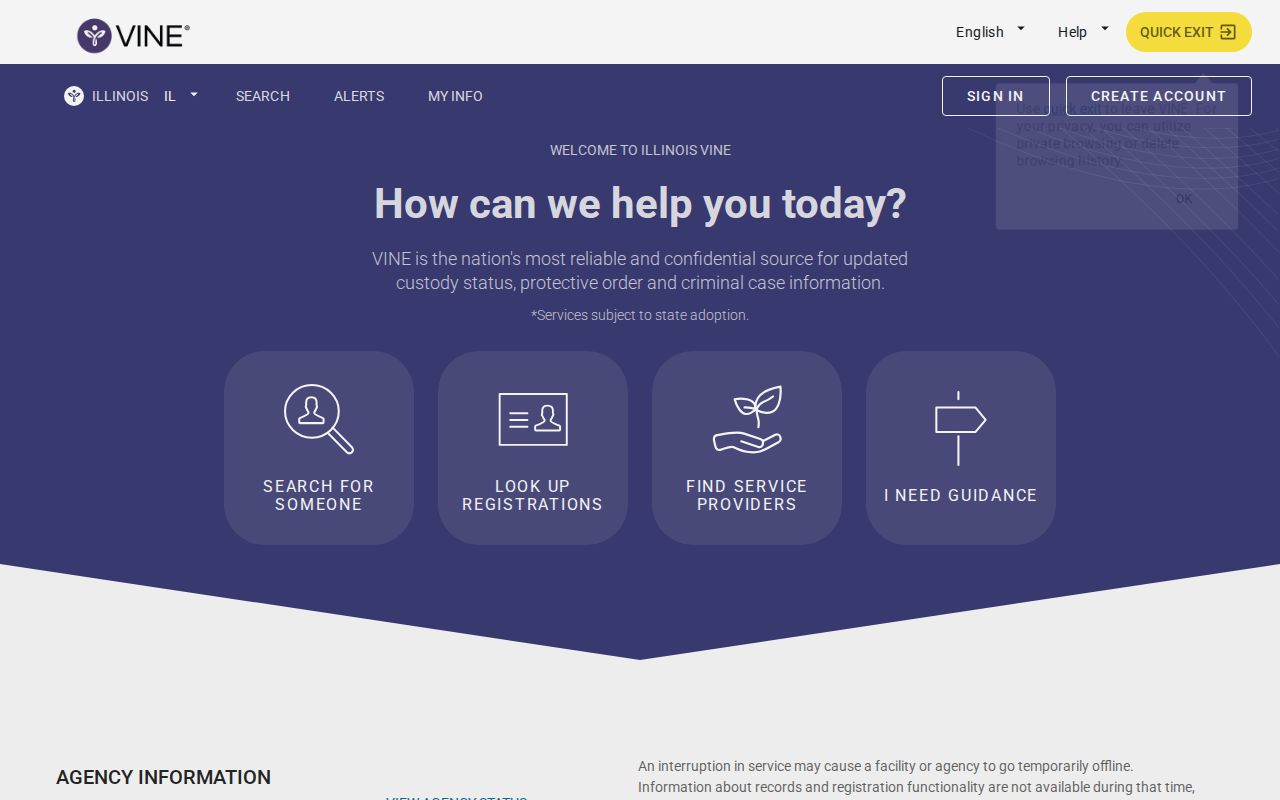
The state screen is the proper starting point; a matching record must still be tied to its contributing agency.
Mason VINELink Release Fields
Labels vary with the source, so quote the displayed wording instead of changing it into a universal “released” status. Read status, location, agency, and event together. A release can mean movement out of one custodian rather than return to the community.
| Displayed item | How to read it |
|---|---|
| Name or identifier | Helps confirm the correct person. |
| Source agency or case | Shows who contributed the information. |
| Custody status | Reports the source's current published status. |
| Facility or location | Identifies the contributing custody location when shown. |
| Event type | May report release, transfer, escape, or another change. |
| Event or update time | May reflect source processing and should be checked against the official record. |
For a Mason jail event, ask the Sheriff for physical release time, authority, and destination. For an IDOC event, read the state profile's Offender Status and Location plus actual or projected dates. “PAROLE” and a parole district indicate release from prison under supervision, not final discharge.
Register Mason County Release Alerts
Notification registration starts from an in-custody match. Choose only the person and source record that have been verified. Illinois VINE may offer phone, text, email, or app channels. Availability appears during registration.
- Open the verified record and select Get Notified or the registration control.
- Choose the available channel and language.
- For telephone registration, create a four-digit PIN and store it privately.
- Save or confirm the registration. Email does not use the telephone PIN.
- When an automated release or transfer call arrives, enter the PIN to acknowledge it.
The registration is confidential, and the subject is not told who registered. Never publish the PIN or use an easily guessed number tied to the person. A notice should prompt a source check, especially when a precise time or destination matters.
IDOC Victim Services can assist with registration at 877-776-0755. IDOC does not administer VINE and cannot access information a registrant supplied to the service. Keep registration help separate from correction of a source-data error.
Mason VINELink Verification Limits
VINE is not legal proof of a release and should not be the sole source for time, authority, or destination. Feed delays can occur. An active court case can remain open after a custody release. Those facts do not conflict.
VINE is not the federal Bureau of Prisons locator. A federal pretrial detainee held at Mason can move under U.S. Marshals authority without appearing as a BOP prisoner. Ask Mason for the receiving agency and use the federal docket. BOP becomes the stronger locator after commitment to federal prison.
For Illinois prison history, use the IDOC Individuals in Custody search. Search by IDOC number, last name, or birth date. Read Parent Institution, Offender Status, Location, actual Parole Date, Projected Parole Date, and Projected Discharge Date according to their labels. Projected dates can change and are not completed release events.
Four Illinois VINE Source Layers
Illinois VINE's distinctive value is its connection to four official layers: county booking systems, IDOC, DHS, and circuit court clerks. A Mason user may see custody and case changes through one service. Yet each event remains dependent on its contributing source.
That structure explains why verification must follow the event back to its owner. The Sheriff controls the Mason release entry. IDOC controls state-corrections status. DHS controls its relevant source data. The Circuit Clerk controls the court record. VINE carries the notice but does not merge those records into one certified release file.
A Mason County release alert can therefore identify the next verification step without proving the final destination. Preserve the agency name, event wording, and alert time before calling the source.
- Custody event
- A reported change in confinement or agency control.
- Transfer
- Departure from one custodian into another, not necessarily community release.
- Parole
- Release from prison under state supervision.
- Discharge
- The end of the applicable custody or supervision status.
Note: Save the alert source and access time before contacting the contributing office.
Fix Mason VINE Alert Problems
Separate data errors from delivery problems. If the custody event is wrong, contact the source jail, IDOC, DHS, or clerk. Give the displayed source, identifier, event, access date, and conflicting official record. Do not send private alert-registration details to an agency that only owns the custody data.
A missing call, text, email, or PIN issue belongs with VINE support. Telephone users can call 866-566-8439. Registration assistance is also available through IDOC Victim Services, though that office cannot see the personal information entered into VINE.
When VINE reports release but the court case remains active, both facts can be true. Custody release does not close a pending case. Note the event time and source, ask the Mason Sheriff for the authority and destination, and read the court order. Likewise, a transfer alert only documents movement from one contributing custodian unless the destination confirms community release.
For safety or urgent action, do not wait for a notification. Contact the appropriate agency or emergency service directly. A service alert supplements, but never replaces, an agency record or personal safety plan.