
Find the Mason County Release Date System
First determine whether the person is in the Mason County Jail, an Illinois prison, federal prison, or another agency’s custody. The Mason County Jail at 102 W. Market Street in Havana is the county’s sole adult detention facility identified in the official facility map. A transfer out of that jail can be a movement to IDOC, Cass County, USMS, or another receiving authority rather than a return to the community.
| Custody | Primary date source | What to verify |
|---|---|---|
| Mason County Jail | Sheriff release record and court order | Physical discharge or transfer time, authority, destination |
| Illinois prison | IDOC offender profile | Projected Parole Date, actual Parole Date, Projected Discharge Date |
| Federal prison | BOP inmate locator | Future projected or past historical Release Date |
| Pretrial custody | Court docket and holding agency | Release order plus completed custody processing |
A live jail roster is not a reliable historical release search because a released person normally drops off a current-custody list. Mason County did not publish an official roster archive or recent-release feed in the reviewed sources. Call the Sheriff at 309-543-2231 or request the release entry for a completed local event.
Look Up a Mason County IDOC Release Date
- Open the official IDOC Individual in Custody Search, not a commercial directory.
- Search by IDOC number when available. Otherwise use the name and date-of-birth options to separate similar names.
- Open the matching profile and confirm identifiers, sentencing county, Offender Status, and Location.
- Read each date by its exact label. Do not substitute Projected Discharge Date for Projected Parole Date.
- Save the page URL and access date. If the date conflicts with a court order or changes unexpectedly, seek written IDOC confirmation.
IDOC explains sentence credits and projected dates on its official family and friends FAQ.
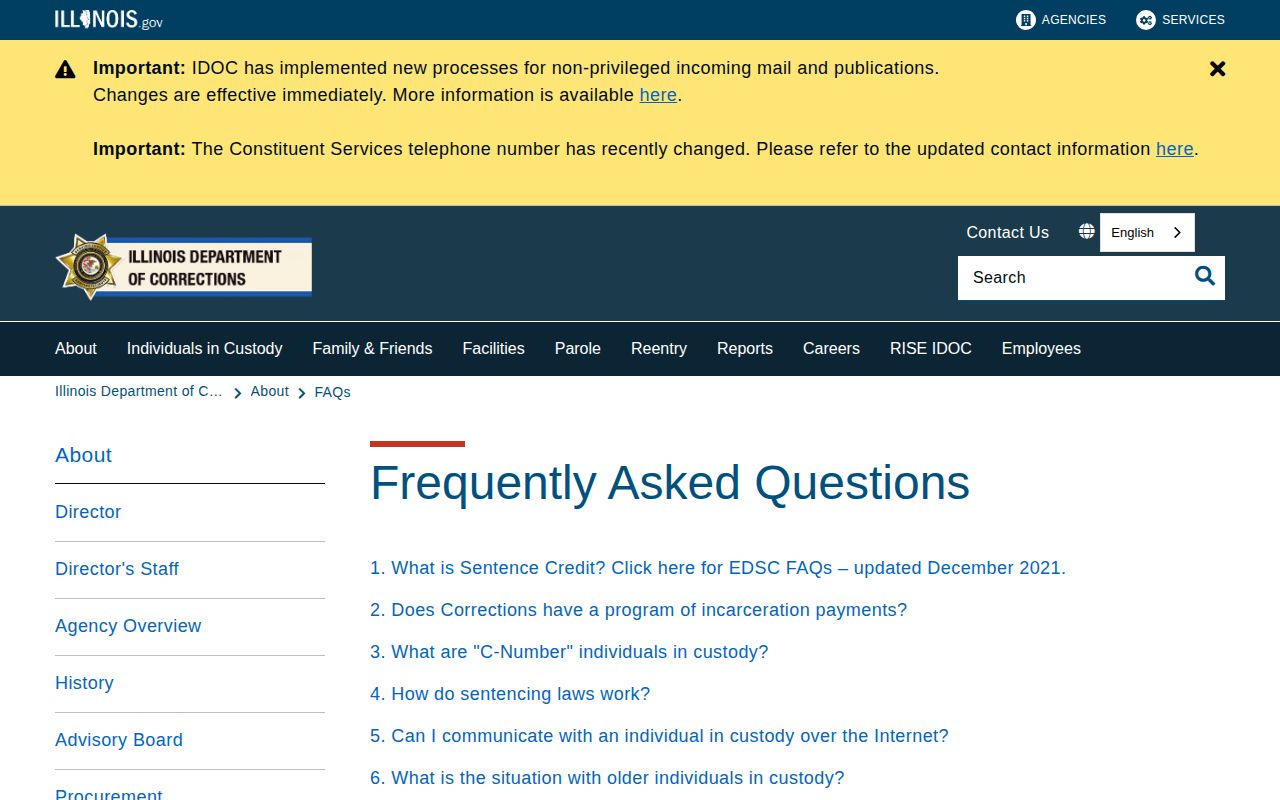
The screenshot is evidence of what the state explained when captured, not a calculation for a particular person.
Mason County Parole Date Is Not Discharge
IDOC uses three date concepts that should remain separate. A Projected Parole Date anticipates exit from incarceration to parole or mandatory supervised release. An actual Parole Date records that custodial-to-supervision transition after it occurs. A Projected Discharge Date anticipates the end of the correctional sentence and supervision. Someone can therefore be released from prison, report to an agent, and remain in IDOC legal custody.
This distinction is especially important after earned discretionary credit. IDOC says an award can revise the projected parole date and update the online profile. A saved screenshot preserves the earlier display but cannot freeze the calculation. The state may also need time to complete release planning, conditions, and processing.
Illinois Credits in Mason County Release Records
Illinois does not apply one universal percentage to every prison sentence. Statutory Sentence Credit can result in service at 50, 75, 85, or 100 percent depending on the offense and governing law. Credit can be lost for behavior. First-degree murder covered by truth-in-sentencing rules generally requires 100 percent, while specified violent offenses can require 85 percent. Other categories have different floors or may permit day-for-day credit.
Program Sentence Credit permits eligible people to earn one-half day for each successfully completed program day. IDOC says people required to serve 85 or 100 percent are not eligible for that credit even if they participate. Earned Sentence Credit may be awarded up to 180 days at the sole discretion of the IDOC Director or designee. Eligibility considers at least 60 days in IDOC, assessments, offense and criminal history, institutional behavior, programming, and treatment. Eligibility is not an entitlement and does not predict an award date.
The controlling provision is 730 ILCS 5/3-6-3. The official statutory page documents the categories rather than a simplified “85 percent” rule.
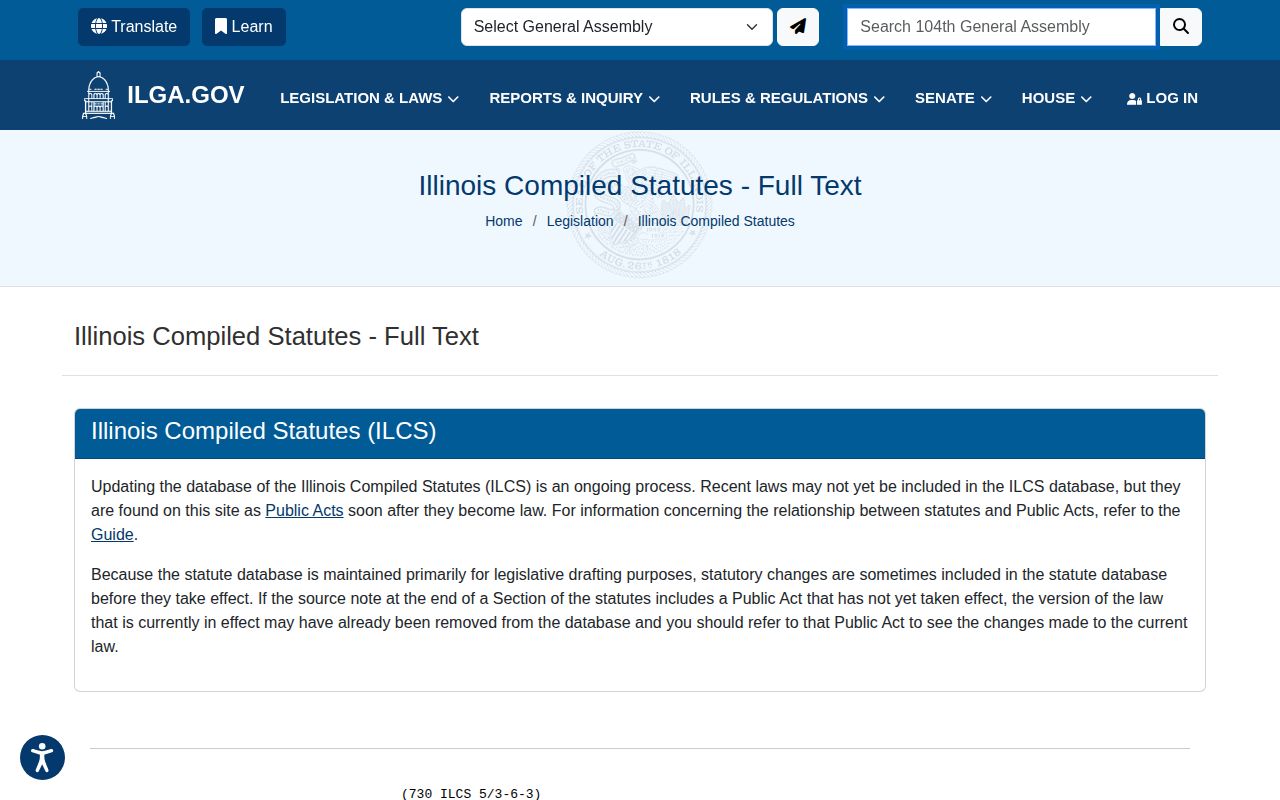
Apply the current law to the actual offense, date, and sentence. Casual offense descriptions are not enough to calculate the term.
Changes to a Mason County Release Projection
A projected date can reflect more than sentence-credit percentages. Jail and court custody credit, consecutive or concurrent terms, a corrected mittimus, disciplinary credit loss or restoration, discretionary awards, and changes to the governing calculation can all matter. IDOC states that it cannot predict whether or when a particular earned discretionary award will occur.
Traditional parole eligibility under 730 ILCS 5/3-3-3 mainly concerns old-law indeterminate sentences. Modern determinate sentences generally lead to MSR. Qualifying youthful-parole cases follow a separate current statute, 730 ILCS 5/5-4.5-115. Those frameworks should not be mixed with sentence credit or reduced to a general years-served formula. Where PRB action applies, a hearing result can be important, but a grant is not necessarily the physical release date.
Mason Jail Date Requests
Do not use an IDOC projection for a person serving a local jail sentence who was never committed to state prison. Obtain the Mason sentencing order from the Circuit Clerk and ask the Sheriff for the jail’s calculation. Pretrial detainees do not have a sentence-based projected date. Their release depends on the court order and the jail’s completion of processing.
A focused Illinois FOIA request can ask the Mason County Sheriff for the booking number, date and time received, date and time discharged or transferred, authority, release or disposition code, and receiving agency or destination. Address a written request to FOIA Officer, Mason County Sheriff’s Office, 102 W. Market Street, Havana, IL 62644. Call 309-543-2231 first to confirm the current submission email, hours, and any duplication fee. Illinois FOIA §2.15 expressly identifies incarceration receipt, discharge, and transfer times among arrest-report information.
A court order can precede door-out processing. When the docket time and jail time differ, label both rather than selecting one. The order explains legal authority; the sheriff’s entry documents physical movement.
Federal Release Dates for Mason County Cases
For a person actually committed to federal prison, use the BOP locator records guide. A future BOP Release Date is projected and can change through recalculation. A past release date combined with “RELEASED” or no facility location is historical evidence that the person left BOP custody, not proof that every form of supervision ended.
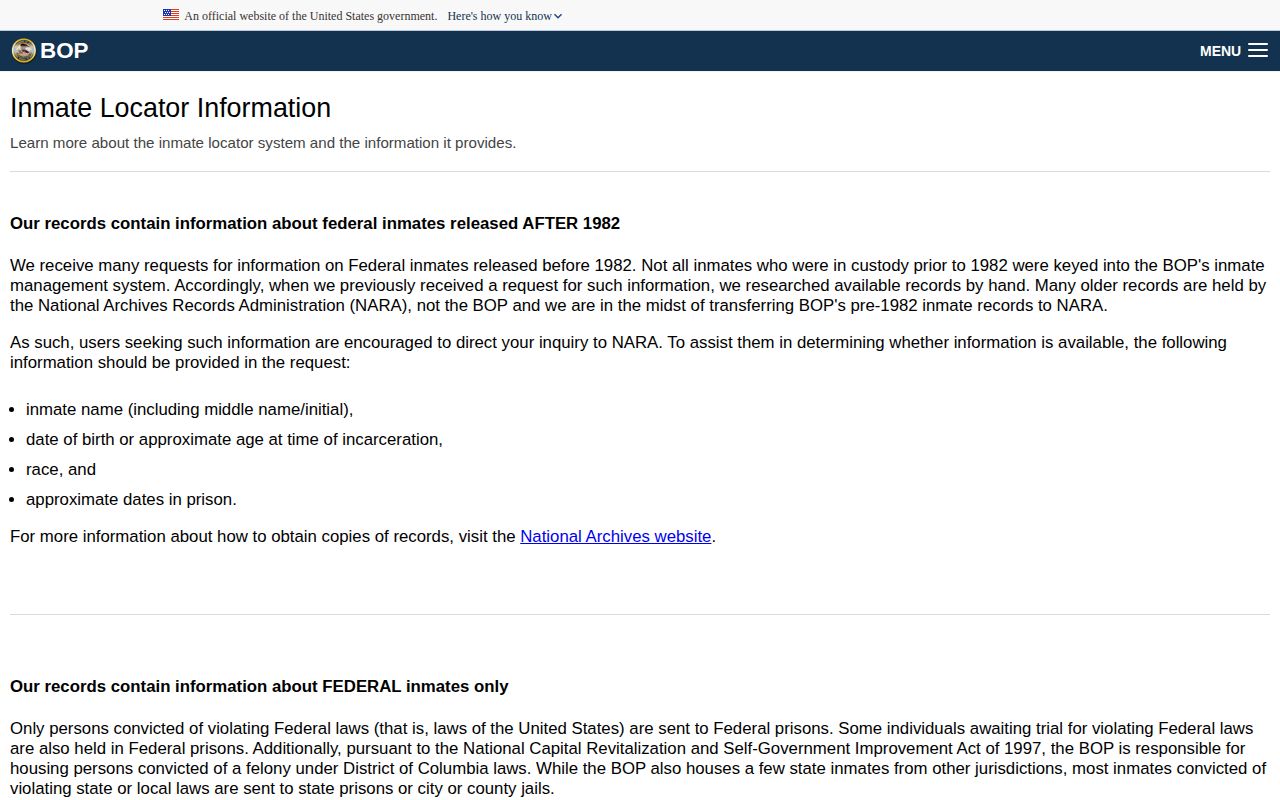
A federal pretrial detainee held temporarily at Mason may not appear as a BOP prisoner. Ask Mason which agency received the person and check the federal court docket.
VINELink Release Check can alert users to a custody event, but VINE does not calculate a sentence. Its event timing depends on the contributing county, IDOC, DHS, or court feed. Verify any alert with the agency that controlled the custody movement.
Resolve Conflicting Mason County Release Dates
First ask whether the dates describe different events. Booking is agency reception. A court order records judicial action. Jail discharge records physical movement. Projected parole anticipates prison exit. Actual parole records the transition to supervision. Projected discharge anticipates the end of correctional legal custody. Mason may transfer someone one day and IDOC may formally admit the person another day.
If two sources truly conflict, preserve both source labels and access dates. Contact IDOC with the IDOC number, displayed fields, URL, access date, and conflicting official document. For a Mason event, provide the full name, aliases, date of birth, approximate arrest date, case number, and arresting agency. Ask whether the person was held under another spelling or for another authority. The Mason County released-inmate guide connects these date records to the complete release-verification path.
A missing result also needs careful treatment. A person absent from IDOC may have served only a county sentence, may not yet have been admitted after a transfer, or may be recorded under different identifiers. A blank VINE result can reflect source timing or retention. Someone who left Mason under USMS authority may remain a pretrial detainee and never appear in BOP until commitment. Use the Mason transfer destination and court case to choose the next system instead of treating silence as proof of release.
Keep a brief evidence note with the exact field, agency, profile identifier, and access date. Recheck a dynamic projection near the expected date, then obtain an actual custody event afterward. If IDOC later displays an actual Parole Date, that supports transition to supervision. If Mason supplies a discharge or transfer time, report the authority and destination with it. This method avoids turning an estimate into an appointment and keeps movement between agencies distinct from community release.
When asking an agency to resolve an error, send the conflicting official document rather than a commercial search result. IDOC needs enough detail to identify the correct profile and calculation. Mason needs the booking or case identifiers and the disputed custody event. A corrected mittimus belongs with the court and corrections calculation; an incorrect VINE alert should be checked with the contributing source agency. Separating correction routes prevents one office from being asked to alter a record owned by another.